
Santorini wine, from a family that lives in the vineyards
Our villas stand in the hills of Mesa Gonia, built from the mountain’s own stone — and on every side of them, vines. The nearest winery is a ten-minute walk. This is the short version of what we tell guests over a glass on the terrace: how Santorini wine works, what to taste, and where to go from our door.
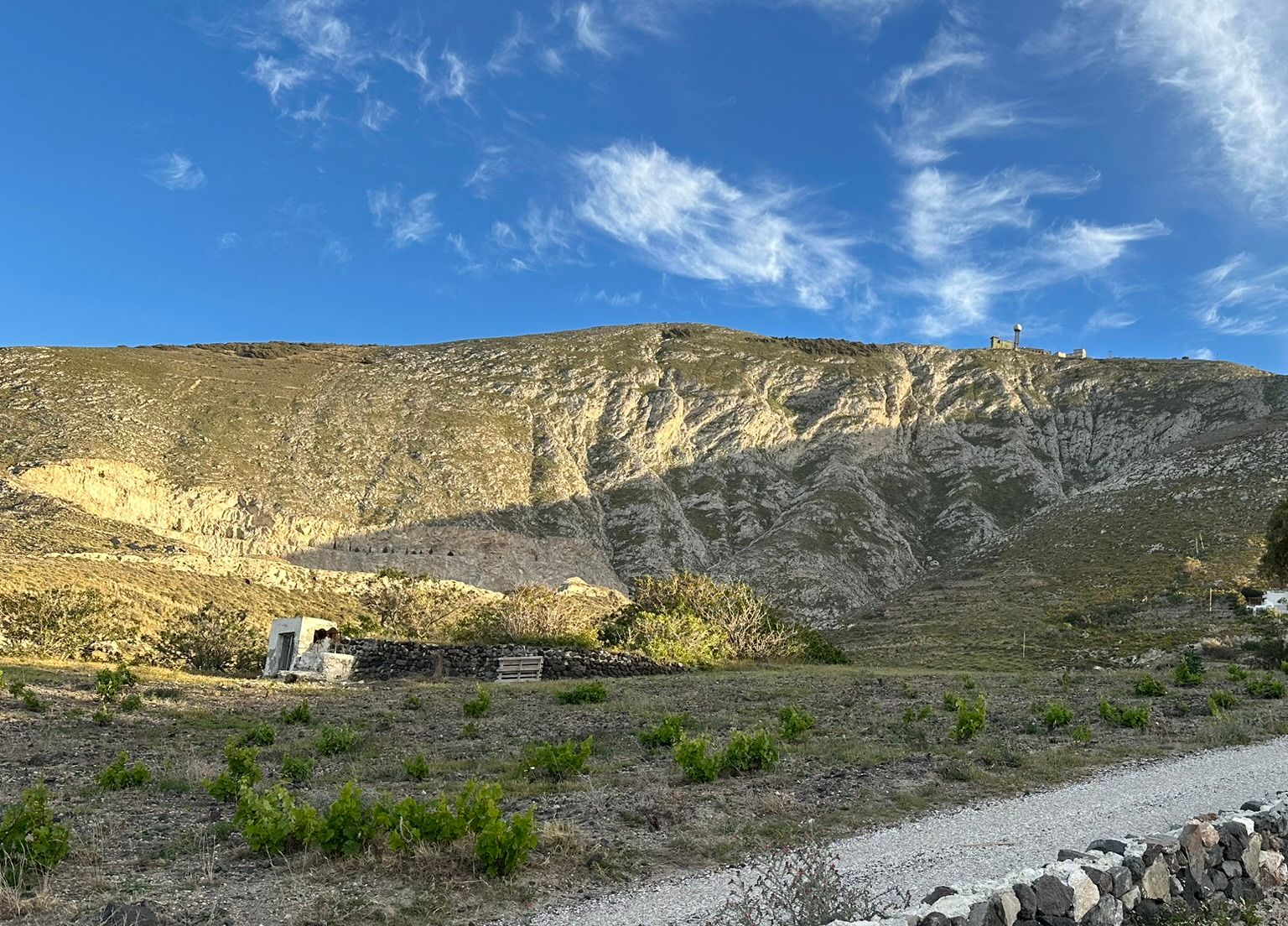
The vines here lie down. The first thing visitors notice in our hills is that the vineyards don’t look like vineyards. No wires, no rows of green walls — instead, low circles resting on the dark volcanic soil, like baskets someone left in the fields. That is exactly what they are: the kouloura, Santorini’s own way of training a vine. Growers weave each vine’s canes, by hand, into a low wreath, and the grapes grow inside it — shielded from the wind, the blown volcanic sand, and the full force of the summer sun. On an island with almost no summer rain, the basket also holds the morning sea mist’s moisture close to the fruit. Nothing about it is decorative. It is a survival system perfected by centuries of watching the weather do its worst.
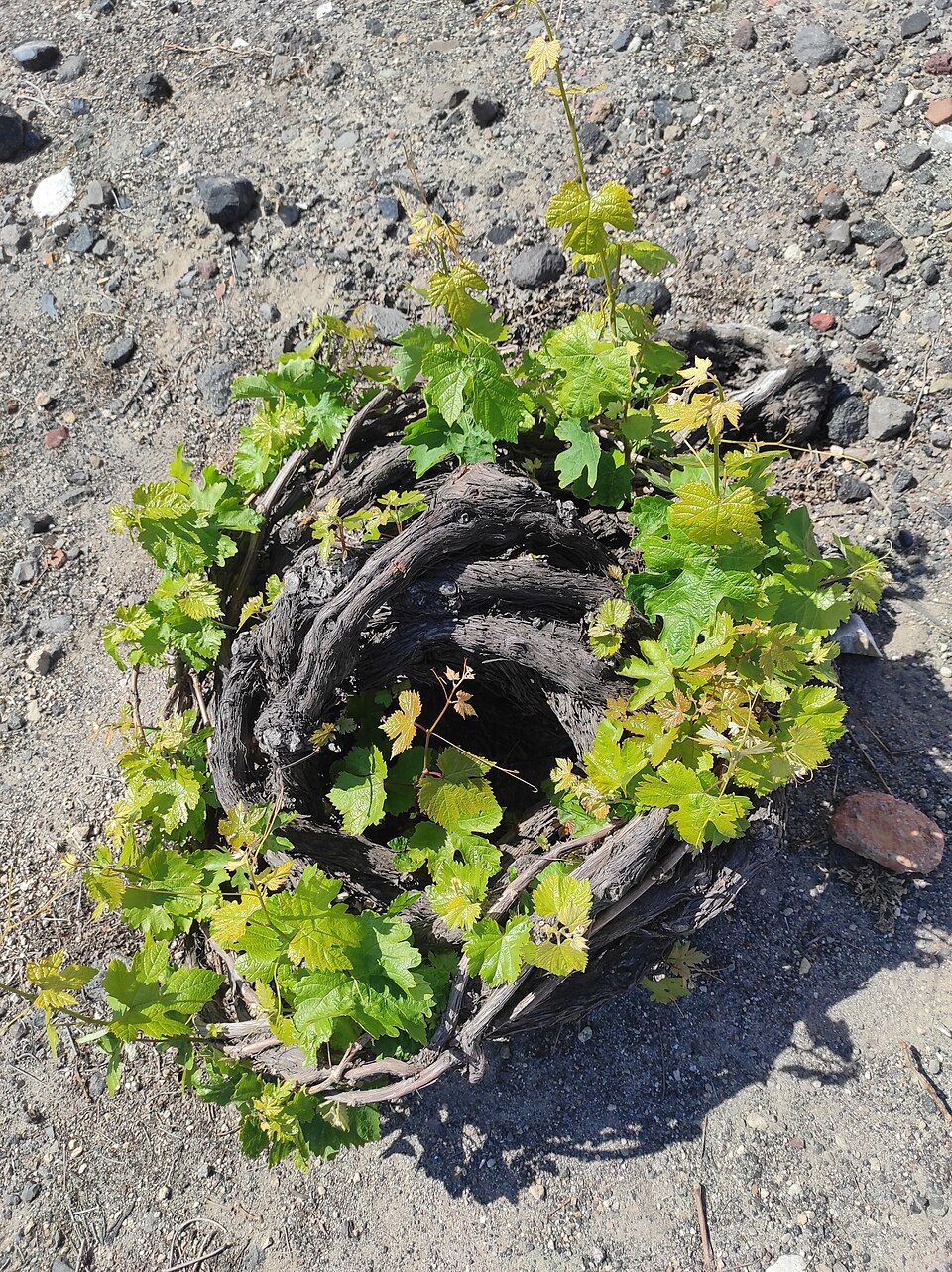
The roots are older than the baskets. Santorini’s volcanic, sandy soil is one of the very few places in Europe where the phylloxera pest never took hold, so the vines grow on their own roots — ungrafted, as vines grew everywhere before the nineteenth century. When a basket grows too old and heavy to work, the growers cut it back and raise a new one from a cane close to the ancient root. The circle you see may be young; the root system beneath it can be a century old, sometimes two. When people say you can taste history in a glass of Assyrtiko, on this island it is not a metaphor.
- Winter pruning & weaving
- Spring the fragile weeks
- Summer sun, mist, dry heat
- Late July–August the vedema (harvest)
- September–November cellar season
A year in the vineyard, in one paragraph. Winter is for pruning and weaving next year’s baskets. Spring is the fragile season, when wind decides much of the crop before anyone sees a grape. Summer is dry heat, bright light and the mist off the Aegean at dawn. Then comes the vedema, as we still call the grape harvest here — a word the island kept from its Venetian lords, who called it vendema. It falls between the last days of July and the end of August, whenever the grapes are ready: every cluster cut low, by hand, out of its basket, and rushed to the press while the fruit is still cool. After it, the quietest and perhaps loveliest season of wine country: September to November, when the cellars have time for visitors and long conversations. If you are choosing when to come for wine, come then — or come in August and watch an island bring in its harvest.
The night the vedema begins. For generations the vedema was a family affair: whole families in the vineyards from first light, donkeys carrying the baskets to the canaves, the grapes trodden barefoot in the stone patitiri to the old harvest songs. Each summer the island relives it at the Vedema festival, on a weekend evening around the turn of July and August, at Santo Wines — the growers’ cooperative winery in Pyrgos, the village our family comes from. Children tread the first grapes, the island’s cultural associations dance, and there is food and wine for everyone, free in recent years. The date is announced in July; if it falls during your stay, we’ll tell you.
What to taste, in one evening. Start with Assyrtiko, the island’s own grape and its calling card: bone dry, citrus and stone, with a salty finish that tastes like the sea air that raised it. If you’re settling in for dinner, ask for a Nykteri — the traditional richer style of Santorini white, fuller and rounder, made for grilled fish and seafood pasta. With red meat, look for Mavrotragano, the island’s rare, structured red — only a small fraction of the vineyard grows it, and it rewards the search. And end, once, the traditional way: a small glass of Vinsanto, the amber sweet wine pressed from sun-dried grapes and aged for years in barrel — dried apricot, honey and spice, balanced by that same Assyrtiko acidity. Sunset on the terrace was made for it.
| Wine | Character | The moment |
|---|---|---|
| Assyrtiko | Bone dry, mineral, a salty finish | The first classic glass |
| Nykteri | Richer and rounder, a touch of oak | The dinner white |
| Mavrotragano | Rare, structured island red | With lamb or beef |
| Vinsanto | Sweet, amber, sun-dried grapes | The sunset glass |
The wineries in our hills. From the villas, you can walk to serious wine. Estate Argyros, ten minutes on foot, is the island’s largest private vineyard owner — a four-generation estate founded in 1903, working some of Santorini’s oldest vines; taste the Assyrtiko range and their Vinsanto. Just across, Canava Roussos has been making wine since 1836 — the island’s oldest winery, and the more traditional canava atmosphere: this is where you feel how Santorini drank its own wine long before visitors came for it. A few minutes further, Artemis Karamolegos pairs one of the island’s broadest ranges with a proper meal at its Aroma Avlis restaurant — the stop to choose when you want tasting and lunch to become one long afternoon. If you also want the postcard, Santo Wines on the caldera pours its flights over the famous view at sunset — book ahead in season, and don’t plan to drive after a generous tasting; we’ll happily arrange a transfer.
And when you stay with us, the long version of all this — label rules, every grape, pairing tables for the island’s dishes, and our honest notes on each tasting room — arrives with your booking: our full Santorini wine annex, part of the personal recommendations guide we write for our guests.
— The Fytros family, Felicity Santorini. Stay in the middle of it: Felicity Cave Villas, built from the mountain’s stone among the Mesa Gonia vineyards. More of the island as we live it: Experiences. Book direct and save 10%.
Questions guests ask
When is the grape harvest (the vedema) in Santorini?
Mostly in August. The vedema, as Santorini calls its harvest, can begin in the last days of July in a hot, dry year (as in 2024) and run to the end of August (as in 2025 and 2026) — each year's weather decides. It is all done by hand, cluster by cluster, from inside the basket vines. September to November is cellar season — the calm months when wineries have the most time for visitors.
What is a kouloura?
Santorini's traditional vine shape: the canes are woven into a low basket resting on the volcanic soil, and the grapes grow inside it, protected from wind, blown sand and harsh sun. It is the clearest visual signature of the island's vineyards.
Which wineries are closest to Felicity Cave Villas?
Estate Argyros is about 800 m away — a ten-minute walk — with Canava Roussos just across from it, and Artemis Karamolegos a short drive further. All three are in or beside the Mesa Gonia hills where the villas stand.